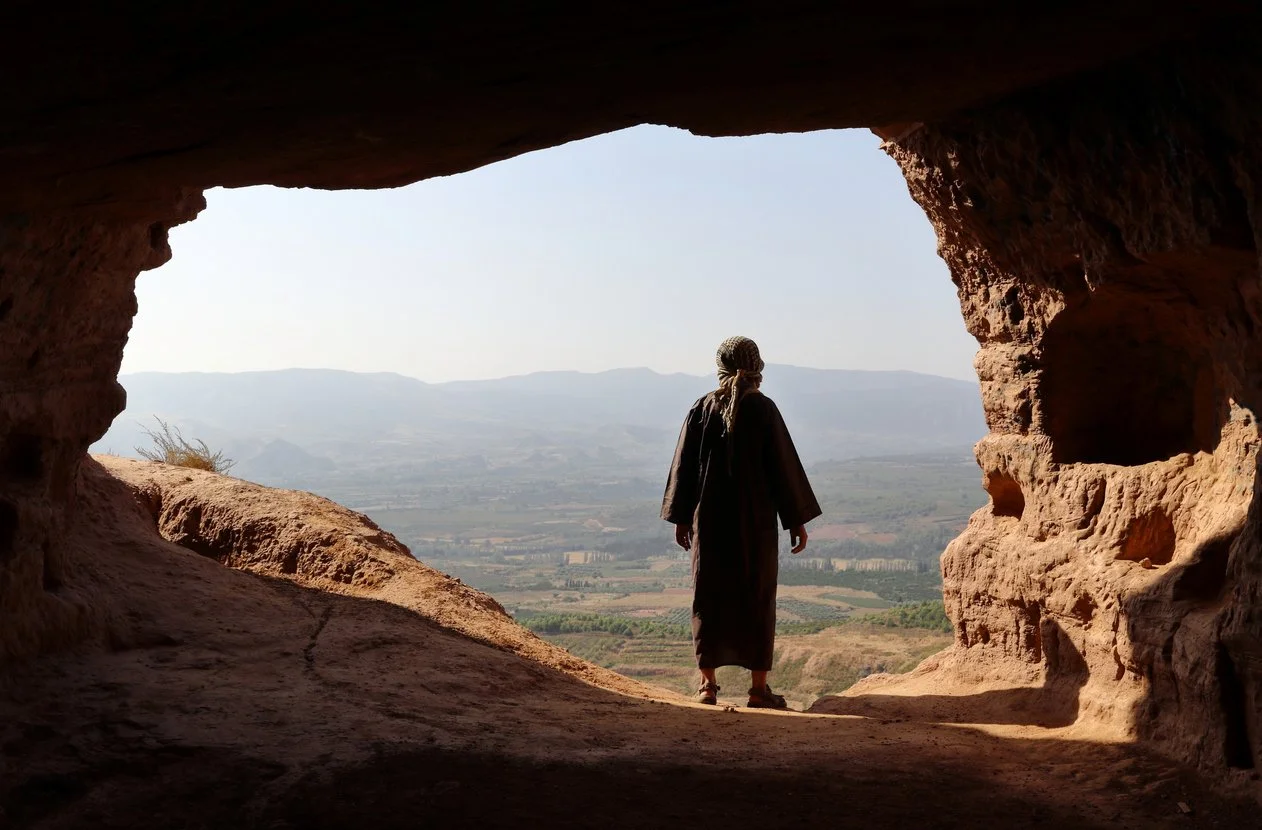
David the Fugitive: Recovery in the Cave of Adullam
Bob Yandian
Psalm 27 was written during one of the most difficult periods of David's life. At this point he was not sitting on the throne, commanding armies, or enjoying the fulfillment of God's promises. He was a fugitive running for his life. The very king he had faithfully served was now determined to kill him. David had gone from national hero to hunted man, and the pressure of that situation exposed weaknesses in his life that otherwise might never have been seen.
The story begins after David killed Goliath. Up until that time David had spent his life as a shepherd. Out in the fields he learned responsibility, courage, and character. He defended the sheep against both a lion and a bear, and those experiences prepared him for the day he would stand before Goliath. Yet those years did more than teach him courage. They taught him dependence on God. David learned early in life that victories do not come through human strength but through trusting the Lord.
When Jealousy Takes Control
After the death of Goliath, David became a national hero. The people admired him, Jonathan loved him as a covenant brother, and Saul placed him over military operations. Everything David touched seemed to prosper. He went into battle and returned victorious. The people celebrated him, and songs were written about him. The women sang, "Saul has slain his thousands, and David his tens of thousands." David's popularity did not create a problem in David's heart, but it created a tremendous problem in Saul's.
Saul became consumed with jealousy. Instead of dealing with the thoughts that were developing in his own mind, he obsessed over David. Day after day he thought about him. Rather than being thankful for a young man whom God was using to strengthen the nation, Saul saw David as a threat. The more David prospered, the more Saul deteriorated. David continued to apply God's Word, continued to operate in humility, and continued to succeed. Saul, on the other hand, surrendered to fear, anger, and envy. What began as jealousy eventually became a determination to kill David.
One of the great lessons found in this story is that being born again is not enough to guarantee spiritual stability. Saul was a believer, but he did not know how to use the Word of God in his daily life. He depended on emotions rather than doctrine. As long as circumstances were favorable, this weakness remained hidden. But when a difficult situation arose, everything that was already in Saul's heart surfaced. Any believer who does not know or use the Word of God only needs one contrary circumstance to reveal what is truly controlling his thinking.
A Detour Caused by Fear
For a long time David seemed almost unaware of Saul's intentions. Jonathan warned him. Saul's daughter warned him. Others around him could clearly see what was happening. Finally David realized the truth. Saul really was trying to kill him. At that moment David made a mistake that became the turning point of this period of his life. Instead of standing on the promises God had already given him, he allowed fear to dominate his thinking.
Fear always changes the way we see circumstances. David knew he had been anointed to become king. He knew God had a plan for his life. Yet fear caused him to focus on the immediate threat rather than the certainty of God's Word. Instead of running in faith, he ran in panic. Instead of trusting God's protection, he trusted his own ability to escape. The result was a series of decisions that brought increasing trouble into his life.
David fled to Nob, where the priests lived and where the tabernacle was located. There he met Ahimelech the priest. In his fear he lied and told Ahimelech that Saul had sent him on a secret mission. Fear had clouded David's judgment to the point that he was now using deception to protect himself. He also took the showbread for food and carried away Goliath's sword. Yet the sword should have reminded him of God's grace. It had not helped Goliath, and it would not help David. It stood as a testimony that God's power, not human strength, had won the victory. Fear blinded David to that lesson.
The consequences of David's actions were severe. Doeg the Edomite witnessed what happened and later reported it to Saul. The information eventually led to the slaughter of the priests at Nob. One priest escaped, but many innocent people died as a result of David's actions. This became one of the greatest burdens David carried during this season of his life. Fear never limits its damage to the person who yields to it. It often affects many others as well.
From Nob, David fled to Gath, the hometown of Goliath. Looking back, it is difficult to imagine a more irrational decision. David entered the city carrying Goliath's sword, and when the people recognized him he suddenly realized the seriousness of his situation. Fear had carried him from one bad decision to another. In desperation he pretended to be insane, scratching on doors and allowing saliva to run down his beard. The people feared harming a madman and eventually forced him out of the city.
Yet even in David's carnality, God preserved him. This is one of the great themes running through Psalm 27. God's faithfulness is greater than our failures. David was wrong. David was fearful. David made decisions that created tremendous problems. Yet God's plan for his life had not changed. God had called him to be king, and God would still bring that calling to pass.
When God Becomes Your Refuge
Eventually David found his way to the Cave of Adullam. What began as a hiding place became a place of recovery. There, away from the confusion and pressure that had controlled him, David came back into fellowship with God. The cave was not significant because of its location. It was significant because of what happened there. David repented. He stopped trusting in his own plans and returned to trusting the Lord.
Every believer needs a place like the Cave of Adullam. There are times when we need to get alone with God and allow His Word to correct our thinking. We need times when the distractions of life are removed and we can once again hear His voice clearly. David entered the cave burdened with fear, guilt, and uncertainty. He emerged with confidence, peace, and renewed faith in God's promises.
It was in this setting that David wrote Psalm 27. The opening verse reveals the transformation that had taken place in his thinking: "The Lord is my light and my salvation, whom shall I fear? The Lord is the strength of my life, of whom shall I be afraid?" These are not the words of a man dominated by fear. They are the words of a man who has returned to fellowship with God.
When David declared that the Lord was his light, he acknowledged once again that all guidance, direction, and understanding come from God. Without light there is no visibility. Without the Lord there is no spiritual understanding. David had spent months making decisions based on fear, but now he was once again walking in the light of God's Word. He had stopped looking at circumstances and started looking at God's promises.
David also declared that the Lord was his salvation. This refers not simply to eternal salvation but to God's deliverance and restoration. David had experienced firsthand what it meant to fail and then be restored. He understood that God does not abandon His people when they stumble. God remains faithful, ready to forgive and restore fellowship when we return to Him.
The next statement reveals the heart of David's recovery. "Whom shall I fear?" Earlier he had feared one man. Earlier he had run from Saul as though God's promises no longer mattered. Now his perspective had changed. He realized that if God had truly called him to be king, then no person and no circumstance could ultimately prevent God's plan from being fulfilled.
David went on to declare that the Lord was the strength of his life. The Hebrew word carries the idea of a fortress. For months David had been searching for safety in locations, strategies, and human solutions. Now he understood that his security was not found in any of those things. His security was found in the Lord Himself. The greatest fortress David possessed was not a cave, a city, or an army. It was his relationship with God.
This new confidence appears throughout the psalm. David wrote, "Though a host should encamp against me, my heart shall not fear." What a remarkable statement from a man who had spent so much time running from fear. The armies of Saul were literally searching for him. Saul had become so obsessed that he pulled military forces from the borders of the nation to pursue one man. Yet David now says that even if an entire army surrounded him, he would not fear. The difference was not in the circumstances. The difference was in David's heart.
One of the greatest lessons David learned in the cave was that fear is conquered by returning to God's promises. The circumstances had not improved. Saul was still king. Saul was still jealous. Saul was still searching for him. But David remembered that God had already spoken. He had been anointed by Samuel. He had been called by God. The promise had not changed simply because the circumstances had become difficult.
As David continued to seek the Lord, his priorities were restored. He wrote, "One thing have I desired of the Lord." Earlier his primary concern had been survival. Now his primary concern was fellowship with God. Fear causes us to focus on ourselves. Faith causes us to focus on the Lord. David had learned through painful experience that true security is not found in preserving yourself but in seeking God's presence.
God's Grace Is Greater Than Failure
The cave also became the place where God began assembling David's future. Men who were distressed, in debt, and discontented gathered themselves to him. At first they hardly looked like the foundation of a kingdom. Yet God used those very people to form David's army. Once again God demonstrated that His methods are often different from ours. David would never have chosen such men, but God did. Deliverance often comes from sources we never expect.
The final portion of Psalm 27 reveals a man fully restored to fellowship. David approaches God in prayer with confidence. He asks for guidance, mercy, and direction. He seeks God's face and expresses complete confidence in God's character. His prayers are no longer the desperate cries of a man trying to save himself. They are the prayers of a man resting in the promises of God.
By the end of this experience David understood something he had forgotten during his flight from Saul. God's grace is greater than our failures. David had made serious mistakes. Innocent people had suffered because of his decisions. Yet God forgave him, restored him, and continued to use him. Had David allowed guilt to dominate his life, he never would have fulfilled God's calling. Instead, he repented, received God's forgiveness, and moved forward.
Psalm 27 stands as a testimony to God's faithfulness during seasons of failure and recovery. David entered the Cave of Adullam as a frightened fugitive, overwhelmed by fear and burdened by the consequences of his own decisions. He left with renewed confidence in God's promises and a restored relationship with the Lord. The cave became the turning point in his life because it was there that he learned once again that God's Word is greater than fear, God's grace is greater than failure, and God's plan is greater than any circumstance that stands in the way.

Godly promotion comes in steps. Slow growth allows us to learn valuable lessons on the way up so once we reach the top, we can stay there and truly enjoy the benefits of success. Those who advance too quickly because of their own efforts and talents often find the descent quicker than the ascent.
“Leadership Secrets of David the King” based on Psalm 131 reveals the secrets of David’s successful leadership learned while ruling as king over Israel.
92 pages paperback

This series chronicles the major events of David’s life and reveals his passion for God through his encounters with Goliath, Saul, and the ark of the covenant. David’s response towards jealousy, disappointment, fear and repentance are also explored. This USB flash drive contains 32 MP3 audio lessons by Bob Yandian, a character study of the life of David.
Lesson Titles:
For Such a Time as This
The Bigger They Are
The Power of Jealousy
Surrounded by Dogs
Conquering Jealousy
Sins of Desperation
Victory in the Cave
Betrayed and Saved
Good Friends, Bad Advice
Vengeance Belongs to the Lord
The Witch of Endor
Ziklag and Gilboa
A Time to be Patient
Faith Always has a Manifestation
Conquering Zion
In Everything by Prayer
Bringing in the Ark
The Davidic Covenant
A Grateful HeartThe God of War and Peace
When Your Good is Evil Spoken Of
Fullness of Joy
The Story of the Ewe Lamb
Getting Back on Track
Chastened and Still Alive
Saved from Yourself
Don’t Give Up
A New Beginning
David’s Lingering Illness
You Can’t Bury A Sin
David’s Final Inspiration
Death of David
32 MP3’s
The MP3s can be listened to on computers, MP3 players, smartphones, tablets, as well as car stereos equipped with USB connections.

This series chronicles the major events of David’s life and reveals his passion for God through his encounters with Goliath, Saul, and the ark of the covenant. David’s response toward jealousy, disappointment, fear and repentance are also explored.
Lesson Titles:
For Such a Time as This
The Bigger They Are
The Power of Jealousy
Surrounded by Dogs
Conquering Jealousy
Sins of Desperation
Victory in the Cave
Betrayed and Saved
Good Friends, Bad Advice
Vengeance Belongs to the Lord
The Witch of Endor
Ziklag and Gilboa
A Time to be Patient
Faith Always has a Manifestation
Conquering Zion
In Everything by Prayer
Bringing in the Ark
The Davidic Covenant
A Grateful Heart
The God of War and Peace
When Your Good is Evil Spoken Of
Fullness of Joy
The Story of the Ewe Lamb
Getting Back on Track
Chastened and Still Alive
Saved from Yourself
Don’t Give Up
A New Beginning
David’s Lingering Illness
You Can’t Bury A Sin
David’s Final Inspiration
Death of David
32 MP3s / MBC13