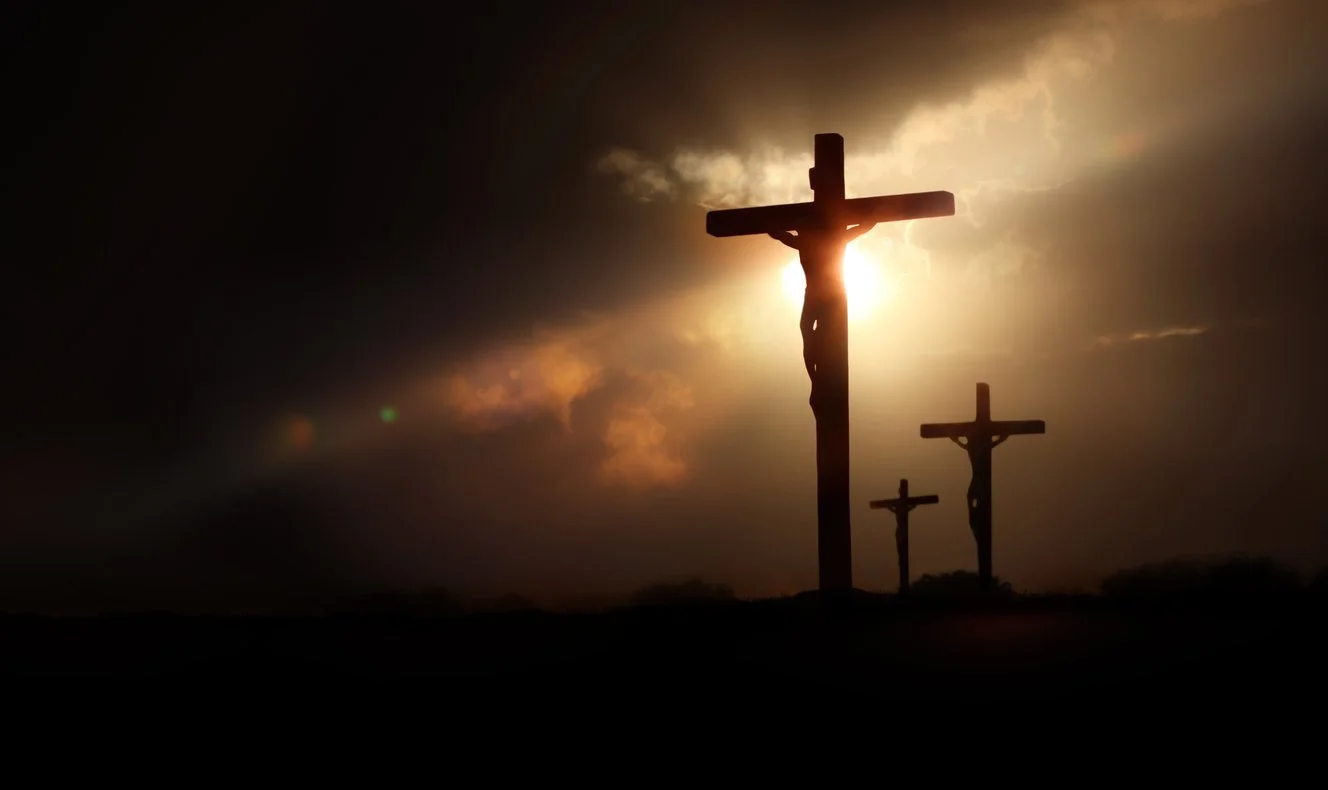
My God, My God, Why Have You Forsaken Me?
Bob Yandian
““My God, My God, why have You forsaken Me?” Matthew 27:45
There are statements Jesus made while suffering physically that are profound, but this one reaches deeper than nails, deeper than thorns, deeper than the spear. This is not merely the cry of a man in pain—this is the cry of a sinless Man who, by choice, became sin for us. Jesus was forsaken by God on the cross.
Jesus was not a victim. He was not overpowered. He wasn’t trapped by circumstances. He laid His life down voluntarily. And on the cross He would later say, “Father, into Your hands I commit My spirit” (Luke 23:46). He died of His own free will. He chose the cross and He chose the moment of abandonment so you and I would never have to be abandoned.
Innocent Blood and the Sinless Man
Innocent men and women have been condemned throughout history. Martyrs were everywhere. Some were killed. Some were delivered. Hebrews 11 tells us that some escaped, others were slain.
But Jesus was different. Those righteous men and women had faults, but they were innocent of the charges brought against them. Jesus was innocent of the charges and sinless as a human being. Even Pilate said, “I find no fault in Him.” Even Pilate’s wife had a dream of His innocence.
God the Father commended Him twice. When Jesus was baptized and the Holy Spirit descended, God said, “This is My beloved Son, in whom I am well pleased.” Later, on the Mount of Transfiguration, when Peter kept trying to interrupt, God said again, “This is My beloved Son, in whom I am well pleased—hear Him.”
God wasn’t grading Christ’s deity. He didn’t need to commend deity. He commended the humanity of Jesus—because Jesus increased in favor and stature with God and man. Not “God” increasing. Not “Christ” increasing. Jesus. The Man. And in His humanity—born outside Adam’s transgression—He continually rejected Satan’s offers. He refused every time. He stayed on course. He went to the cross and died for us.
“My God, My God”
“And about the ninth hour Jesus cried out with a loud voice, saying, “Eli, Eli, lama sabachthani?” that is, “My God, My God, why have You forsaken Me?” Matthew 27:46
Up until that moment, Jesus had endured beatings, thorns, and nails and He did not cry out like this. The Bible says, “like a sheep before her shearers is dumb, so He opened not His mouth” (Isaiah 53:7). But the moment the sins of the world were placed on Him He cried out. This is what the nails, the spear, and all the physical torture couldn’t produce. Because this was not primarily physical suffering. This was spiritual suffering.
And then darkness covered the earth. Not natural darkness. This was supernatural darkness for about three hours—so intense you couldn’t see your hand in front of your face. I imagine people were petrified. Soldiers, bystanders, everyone standing there—nobody knew what to do when God turned out the lights.
He Said, “My God” and Not “My Father”
Earlier on the cross Jesus said, “Father, forgive them.” This is relationship language. This is family language. But now He said, “My God, My God.” This is the only time in His earthly life Jesus addressed His Father as God in this way. Why? Because at that moment the Father turned His back. Jesus couldn’t address Him as Father, because God is not the Father of sin. And when Jesus became sin on the cross, God had to turn His back on His own Son.
This was prophesied in Psalm 22 with those very words: “My God, My God, why have You forsaken Me?” Psalm 22 is the Messianic Psalm of the crucifixion, just like Isaiah 53 is the prophetic voice explaining what Jesus would do for us. When Jesus cried out, He wasn’t only expressing the horror of abandonment—He was also fulfilling Scripture.
He Did Not Merely Take Sin—He Became Sin
“For He made Him who knew no sin to be sin for us, that we might become the righteousness of God in Him.” 2 Corinthians 5:21
Jesus not only took upon Himself sin—He became sin for us. He had no sins of His own. But He became the righteous dying for the unrighteous. On the cross, righteous Jesus accepted our unrighteousness. And at that point, He became sin. God placed the sins of the world on Him. Not His sins—ours. Here is the wonderful truth: God has not forsaken us because He forsook Jesus.
As a believer, we will never be forsaken by God. Never. Not because we are perfect, but because we are not. We have all had days we have forsaken God. But God never forsakes His family.
People forsake us. Friends forsake us. Even family can forsake us. Paul said in 2 Timothy 4, “All have forsaken me,” and he asked Timothy to bring his coat and his parchments. Why? People may leave, but the Word will never forsake me. Jesus suffered being forsaken by God so we would never face it.
The Cry of a Lost Man
Jesus did not simply suffer; He experienced the condition of spiritual death. When He called Him “God,” it was the cry of a lost man. Only one other in history faced this in purity of creation: Adam. But Adam was guilty. Jesus was innocent. Adam’s sin caused sin to pass upon all men. Jesus accepted our sin so righteousness could pass upon all men.
Why didn’t God respond? Because God is holy—and sin was on Jesus. Not because Jesus was sinful by nature. Not because He was born under Adam. He wasn’t. He was born outside Adam’s transgression. But He carried our sins, and God could not look on Him.
“But I am a worm, and no man; A reproach of men and despised by the people.” Psalms 22:6
This is one of the most fascinating statements in Psalm 22. The Hebrew word for worm is “tola.” It was a rare worm, valuable, protected, hard to raise. When it was crushed, it produced a crimson dye used for royalty. Kings guarded it. Only royalty wore that color.
Jesus is saying, “I am that tola. No one is like Me. Born of a virgin. Tempted and never failed. Protected until the cross. And then crushed.” His blood purchased a royal family. You and I now wear the garments of the King, because we are in the King’s family. He was despised by the people. Reproached. Mocked. And yet He was the most valuable life that ever walked the earth.
God Did Not Murder His Son—Jesus Laid Down His Life
I was asked one day to speak on capital punishment, and there were protestors there. In the middle of it a man stood up and screamed, “How can you serve a God that murdered His own Son?” I had never heard that argument before. And for a moment, I was stunned. Then the Holy Spirit spoke to me and gave me the answer.
I said, Sir, God didn’t kill His Son. Jesus said no man takes My life. I lay it down when I want to, and I pick it up when I want to. And on the cross He said, “Father, into Your hands I dismiss My spirit.’” Jesus died of His own free will. But while He died of His own free will, God laid the sins of the world on Him—including the sins of the protestors, the crowd, you, me—everyone. Jesus voluntarily became sin and willingly died—so we could be saved.
The Eternal Result: Never Forsaken Again
Because Jesus cried, “My God, My God, why have You forsaken Me?” you and I will never have to cry it. When you receive Jesus as Lord and Savior, you are eternally part of God’s family. God is eternally your Father. Jesus is eternally your older Brother. And we are children in the family of God. The greatest gift is this: you are reconciled to God forever. Jesus didn’t complain when disciples forsook Him. He didn’t scream at the nails. He didn’t roar at the thorns. But when sin was placed on Him—He cried out. He did it for you. He went to the uttermost to save you to the uttermost. And because He was forsaken for that terrible moment, you can live with this confidence: God will never forsake you.
Deepen Your Understanding of Scripture
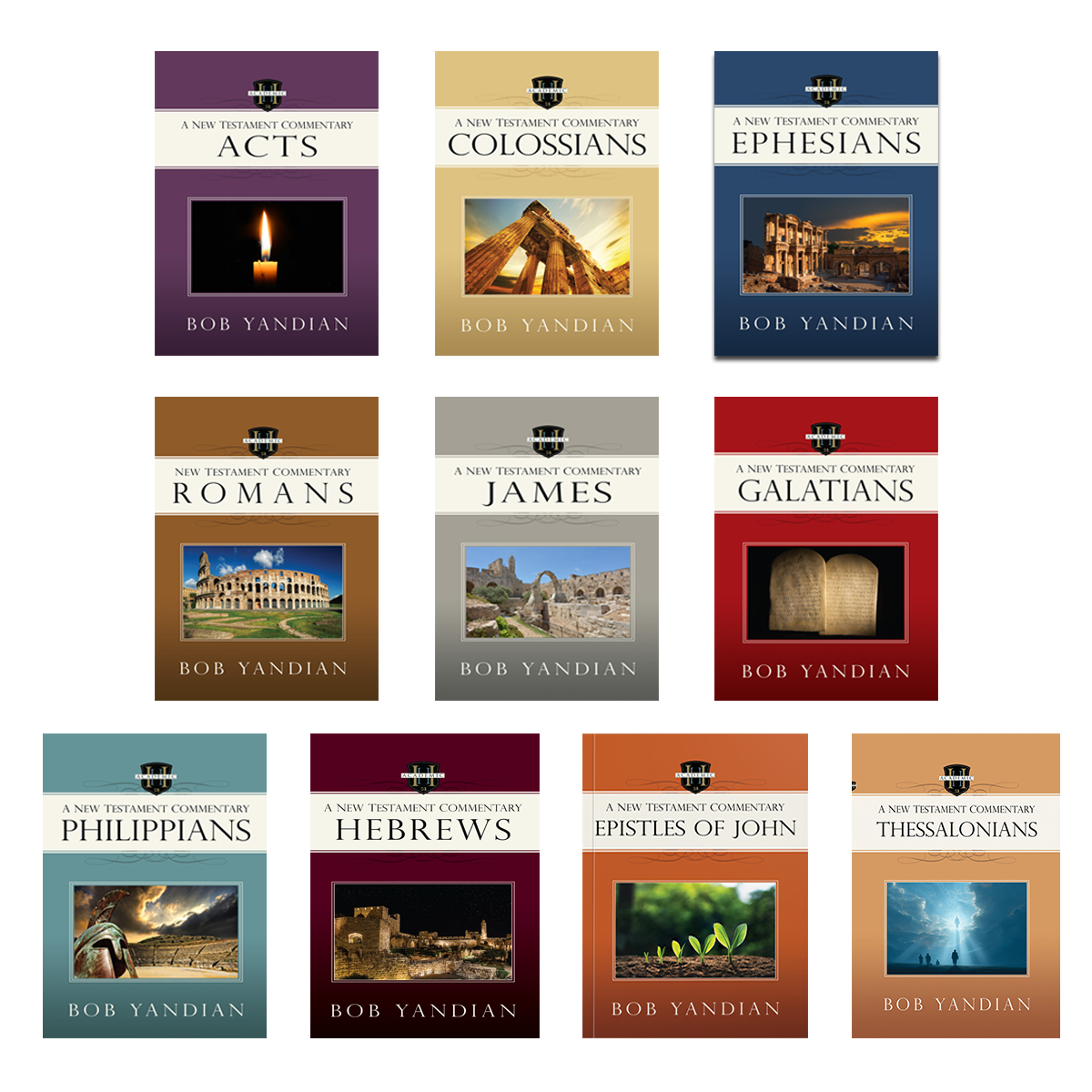
Unlock fresh insight into God’s Word with the New Testament Commentary Bundle from Pastor Bob Yandian — a comprehensive collection of verse-by-verse commentaries on ten foundational New Testament books. Carefully crafted from years of pastoral teaching and study, this bundle equips believers, students, and church leaders with clear explanation, practical application, and spiritual depth.
Purchase this book bundle and save! This bundle includes one of each of Bob Yandian's New Testament Commentary books listed below.
Acts Commentary
Romans Commentary
Galatians Commentary
Ephesians Commentary
Philippians Commentary
Colossians Commentary
James Commentary
Hebrews Commentary
Epistles of John Commentary
New! Thessalonians Commentary
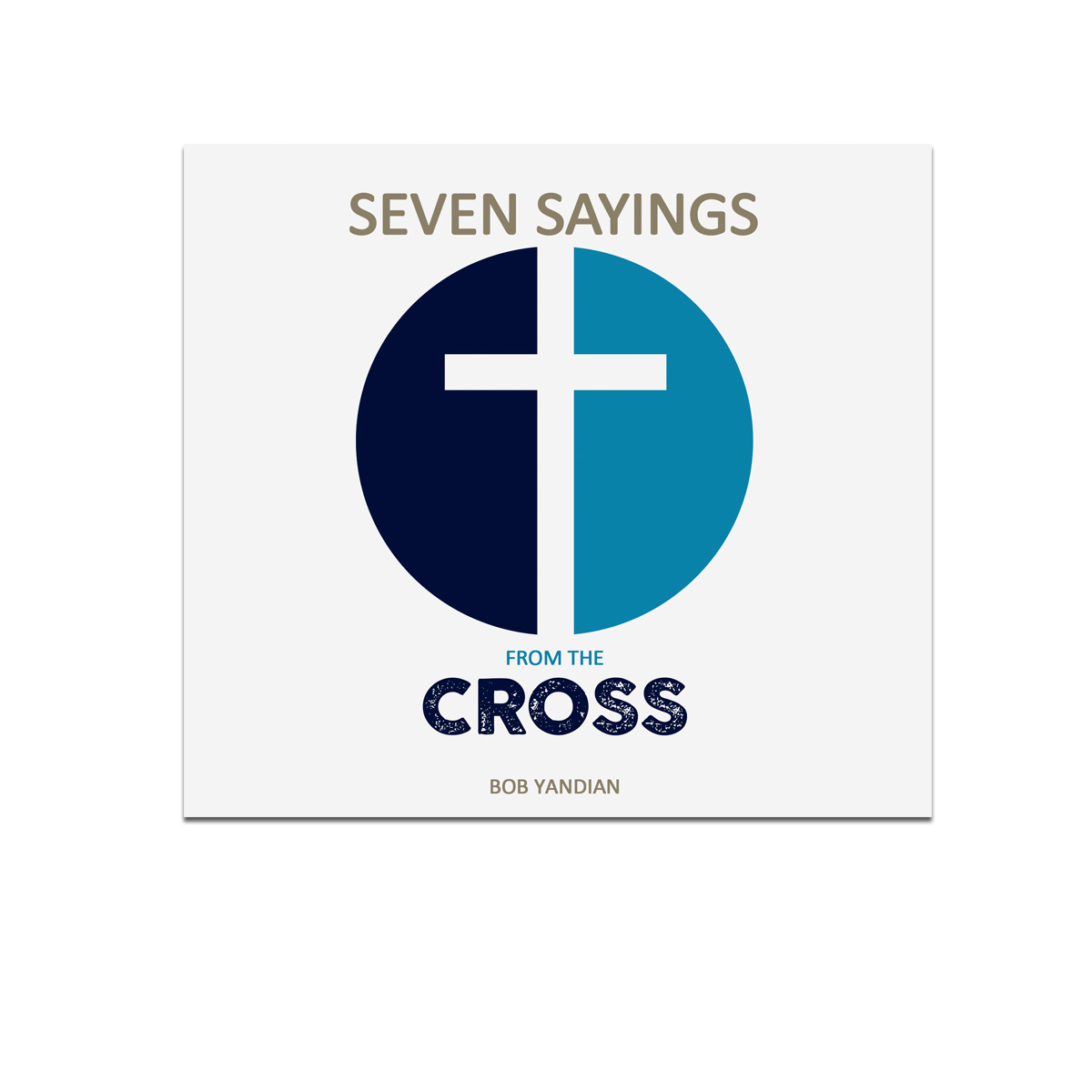
Jesus’ final words, the last seven statements He made before descending and ultimately ascending from earth into heaven, hold great significance. In this topical study, the seven statements Jesus made from the cross will be examined and what the significance of those statements is in the lives of believers today.
Message Titles:
Father Forgive Them
Today In Paradise
Behold Thy Son
My God, My God
I Thirst
It Is Finished
Father Into Thy Hands
7 MP3s / MRD06

Almost three-quarters of a century after Hebrew believers turned the world upside down, much of the church at Jerusalem had become mired in the legalistic trenches of Judaism and mixed the Mosaic law with their faith in Christ. Like a disease, this tainted doctrine spread to the rest of the church, provoking the apostle Paul to respond with what has become one of the most intricate and astounding revelations of Jesus Christ in the New Testament.
Using historic biblical detail and nuances from the original Greek, Bob Yandian dissects Paul's brilliant argument for the superiority of Jesus Christ, starting with an introduction to the hypostatic union. Yandian then goes on to explore, verse-by-verse, several other themes including the walk of maturity, the reality of authority, and the importance of faith. Yandian's commentary is concerned not only with enlightenment but with application as believers are challenged to take their place as coheirs of the risen and glorified King of kings.
188 Pages