
A Healing Mess
Bob Yandian
There were times when Jesus healed and it caused a quiet rejoicing, and there were other times when it caused a public explosion.
When He healed the man at the pool of Bethesda, it stirred up a huge commotion. People were used to that man being lame. His condition had become part of the scenery. He was “the lame man by the pool,” and everybody knew him that way. When Jesus healed him, people didn’t know what to do with it.
The religious leaders didn’t rejoice—they interrogated. They kept questioning him. The same thing happened with the man born blind. After his healing, the Pharisees kept dragging him in and demanding explanations. Jesus’ miracle exposed their unbelief, their jealousy, and their hard hearts. The healing of the man created a mess, but it was a healing mess. The miracle forced people to deal with what was wrong in themselves.
Ambition, Misunderstanding, and a Bigger Mess
“Behold, we are going up to Jerusalem, and the Son of Man will be betrayed to the chief priests and to the scribes; and they will condemn Him to death and deliver Him to the Gentiles to mock and to scourge and to crucify. And the third day He will rise again.” Matthew 20:18-19
Jesus was describing His mission—the cross, the suffering, the betrayal, and His resurrection. Yet right in the middle of this holy moment, the mother of Zebedee’s sons (James and John) interrupts Him with a personal agenda.
“Then the mother of Zebedee’s sons came to Him with her sons, kneeling down and asking something from Him. And He said to her, “What do you wish?”
She said to Him, “Grant that these two sons of mine may sit, one on Your right hand and the other on the left, in Your kingdom.” Matthew 20:20-21
Jesus is talking about the cross. She is talking about positions. He is focused on sacrifice. They are focused on status.
Jesus cuts to the heart of the issue. He doesn’t really answer the mother; He looks at the sons who put her up to it. He asks them, “Are you able to drink the cup that I am about to drink, and be baptized with the baptism that I am baptized with?”
Without understanding what they were saying, they quickly answered, “We are able.”
They had no idea what they were agreeing to. Jesus was not saying they would die on a cross for the sins of the world—only He could do that. But He was saying, “The same hatred, rejection, pressure, and persecution that is coming against Me is going to come against you when you live out this message in front of people.”
In essence: “My suffering will be through My death. Yours will be through your life. Are you willing to live that out?”
They said yes, not knowing what it meant. And Jesus said, “You will indeed drink My cup” but to sit at His right or left was not His to give. That belonged to the Father.
James and John look proud. Their mother looks pushy. The other ten disciples hear about it and get mad. They don’t see their own ambition; they only see someone else trying to get ahead of them. What began with one mother and two sons now has twelve disciples offended, arguing, and comparing themselves. And Jesus, by answering the question honestly, seems to have made things worse.
Servanthood: God’s Answer to Self-Promotion
In the midst of the disciples’ anger, Jesus calls them together and uses the mess to expose the real issue—their hearts.
He says, “You know that the rulers of the Gentiles lord it over them, and those who are great exercise authority over them. Yet it shall not be so among you; but whoever desires to become great among you, let him be your servant” Matthew 20:25-26.
The world’s system is to climb by stepping on other people. Rome did it to Israel. The Pharisees did it to the people. And the disciples were beginning to imitate it in the ministry.
Jesus tells them, “That’s not how My kingdom works. Your candle doesn’t burn brighter because you blow someone else’s out.”
He gave them a new pattern: Want to be great? Become a servant. Want to be first? Become a slave to others. Want to be promoted? Take the lowest place.
He even gave a practical example: When you are invited to a banquet, don’t push your way to the most honored seat. Sit in the lowest place. That way, there is nowhere to go but up. If you take the highest place, you might be asked to move down, and that’s humiliating. But if you start at the bottom and are invited higher, that’s honor (Luke 14:7-11).
Jesus Himself modeled this. He didn’t just teach servanthood; He lived it. He came as a man, He washed His disciples’ dirty feet, He stooped to the lowest job in the room. He didn’t come to be served, but to serve, and give His life as a ransom for many.
Hebrews 5:8 says, “Though He was a Son, yet He learned obedience by the things which He suffered.”
The disciples’ argument was ugly. Their motives were exposed. But Jesus used the whole mess to correct their thinking, to humble their hearts, and to bring them back to the truth: greatness in the kingdom comes through serving.
Two Blind Men, a Shouting Crowd, and a Stopped Savior
“Now as they went out of Jericho, a great multitude followed Him. And behold, two blind men sitting by the road, when they heard that Jesus was passing by, cried out, saying, “Have mercy on us, O Lord, Son of David!” Then the multitude warned them that they should be quiet; but they cried out all the more, saying, “Have mercy on us, O Lord, Son of David!”
So Jesus stood still and called them, and said, “What do you want Me to do for you?”
They said to Him, “Lord, that our eyes may be opened.” So Jesus had compassion and touched their eyes. And immediately their eyes received sight, and they followed Him.” Matthew 20:29-34
The word mercy is powerful. They are saying, “We don’t deserve this. We are not demanding it. We are not boasting of our worthiness. But we know You are merciful.”
That always stops Jesus.
Verse 32 says, “Jesus stood still.” Surrounded by a multitude, on His way to Jerusalem and the cross, He stops for two men everyone else wants to ignore.
He asks them the same question He asked others: “What do you want Me to do for you?” They answered simply, “Lord, that our eyes may be opened.” Jesus has compassion on them, touches their eyes, and they immediately receive their sight and follow Him.
Once again, He has humiliated the crowd. The very people who tried to silence the blind men are now watching those men receive the attention, compassion, and power of the Lord. Jesus exposes their pride and corrects their attitude toward the weak, the needy, and the broken.
Turning Over Tables: A Mess in the Temple
Matthew 21:12-13, Jesus walked into the temple, looked around, and saw what God designed as a house of prayer has become a marketplace. Sacrifices are being sold at inflated prices. Worship has been mixed with greed and convenience. People have grown so used to it that they think it’s normal.
Jesus didn’t form a committee. He didn’t send a polite memo. He made a whip and drove out the merchants, flipped over tables, scattered money, and threw out cages of doves. Coins roll across the floor. People shout. Animals run. It’s chaos. Another mess.
But listen to His words, “It is written, My house shall be called a house of prayer,’ but you have made it a den of thieves.”
They tolerated the wrong thing for so long that they no longer saw it as wrong. Jesus had to create a visible mess to reveal a spiritual mess. When He was finished, the house was cleaner, the purpose was restored, and prayer and healing could flow again.
When the Word Divides Before It Heals
Jesus also said in Matthew 10:34–36, “Do not think that I came to bring peace on earth. I did not come to bring peace but a sword. For I have come to set a man against his father, a daughter against her mother, and a daughter-in-law against her mother-in-law’; and a man’s enemies will be those of his own household.”
He was not saying He delights in families fighting, but that truth divides before it heals. The Word of God is called a sword—a sharp, two-edged scalpel that cuts between soul and spirit.
When you receive Jesus, your life changes. People you used to run with think you have lost your mind. Families become angry. Parents feel ashamed that you left their dead church and joined a Spirit-filled one. Old friends don’t know what to do with you.
At first it looks like a relational mess. But that sword cut is made for healing. Over time, that same changed life, that “healing mess,” becomes the very thing God uses to bring your family to Him. Parents who once mocked you end up sitting on the back row of your church, then moving up closer, then weeping at the altar, then serving beside you.
What began as a division becomes a testimony.
Trust the God of the Healing Mess
When Jesus heals, He doesn’t just fix symptoms. He reaches hearts, exposes motives, corrects attitudes, and reorders priorities. That process can be noisy, painful, and messy.
Maybe right now things look out of control in your life. Don’t panic. Don’t assume you missed God. Let God finish what He started. Stay humble. Take the lowest place. Cry out for mercy, not status. Keep your eyes on Jesus, the greatest servant of all, who knows how to turn every mess—yours, mine, and everyone else’s—into a testimony of His grace.

Bundle and save! Includes a copy of The Grace of Healing and How Deep are the Stripes?
The Grace of Healing
Why does God heal some people but not others? Do you have questions about divine healing? How does it work? What is required? How much faith is necessary?
In The Grace of Healing, pastor, author, and renowned Bible teacher Bob Yandian answers these questions while revealing the missing ingredient to the healing you’ve been praying for—grace!
176 Pages - Paperback
How Deep are the Stripes?
When Adam sinned in the garden, he opened the door to every spiritual and physical curse for all mankind, including sickness.
Jesus said in John 10:10, “The thief (Satan) comes not, but to steal, kill and destroy: I come that they might have life, and that they might have it more abundantly.”
Sickness and disease are no more than an outward manifestation of eventual death with the sole purpose of hindering you from fulfilling God’s perfect plan and destiny for your life. But Jesus came to give you life. That life includes walking in health and wholeness and finishing, in victory, the course God has set before you to run!
As you meditate and apply the revelation available in this powerful book you will be equipped to walk in the wholeness which belongs to you in Jesus Christ.
193 pages - Paperback

This video curriculum is the companion to Bob Yandian’s “The Grace of Healing” book. It works well for group, or individual study.
Over the course of church history, the doctrines of grace and faith have been taken to separate extremes as they relate to healing. The result is that many believers struggle to understand or receive healing from God. This teaching offers practical and straight-to-the-point biblical teaching that balances the elements of grace and faith. Topics include: The Healing Lamb, The Year of Jubilee, Compassion and Healing, and much more. (Includes Study Questions)
9 - (30 minute) Video Lessons. Comes with a copy of the book “The Grace of Healing.”
Available on DVD or Flash Drive.

When Adam sinned in the garden, he opened the door to every spiritual and physical curse for all mankind, including sickness.
Jesus said in John 10:10, “The thief (Satan) comes not, but to steal, kill and destroy: I come that they might have life, and that they might have it more abundantly.”
Sickness and disease are no more than an outward manifestation of eventual death with the sole purpose of hindering you from fulfilling God’s perfect plan and destiny for your life. But Jesus came to give you life. That life includes walking in health and wholeness and finishing, in victory, the course God has set before you to run!
Not only has Jesus conquered death, hell, and the grave, He has given you authority over every sickness or disease that would ever try to steal the health that belongs to you.
3 John 2: Beloved, I wish above all things that you may prosper and be in health, even as your soul prospers.
As you meditate and apply the revelation available in this powerful book you will be equipped to walk in the wholeness which belongs to you in Jesus Christ.
193 pages

Revealing God’s Heart to Heal
Why does God heal some people but not others? Do you have questions about divine healing? How does it work? What is required? How much faith is necessary?
In The Grace of Healing, pastor, author, and renowned Bible teacher Bob Yandian answers these questions while revealing the missing ingredient to the healing you’ve been praying for—grace!
Over the course of church history, the doctrines of grace and faith have been taken to separate extremes as they relate to healing. The result is that many believers struggle to understand or receive healing from God. Those on the side of grace deny the need for faith, believing that God only heals a select few. For those who only see a need for faith, the pursuit of healing becomes a legalistic struggle to change God’s mind.
But Pastor Bob takes a different approach, offering practical and straight-to-the-point biblical teaching that balances the elements of grace and faith—so your health can spring forth speedily.
You’ll find the healing you’ve been waiting for when you find the missing ingredient of grace!
176 Pages
Paperback
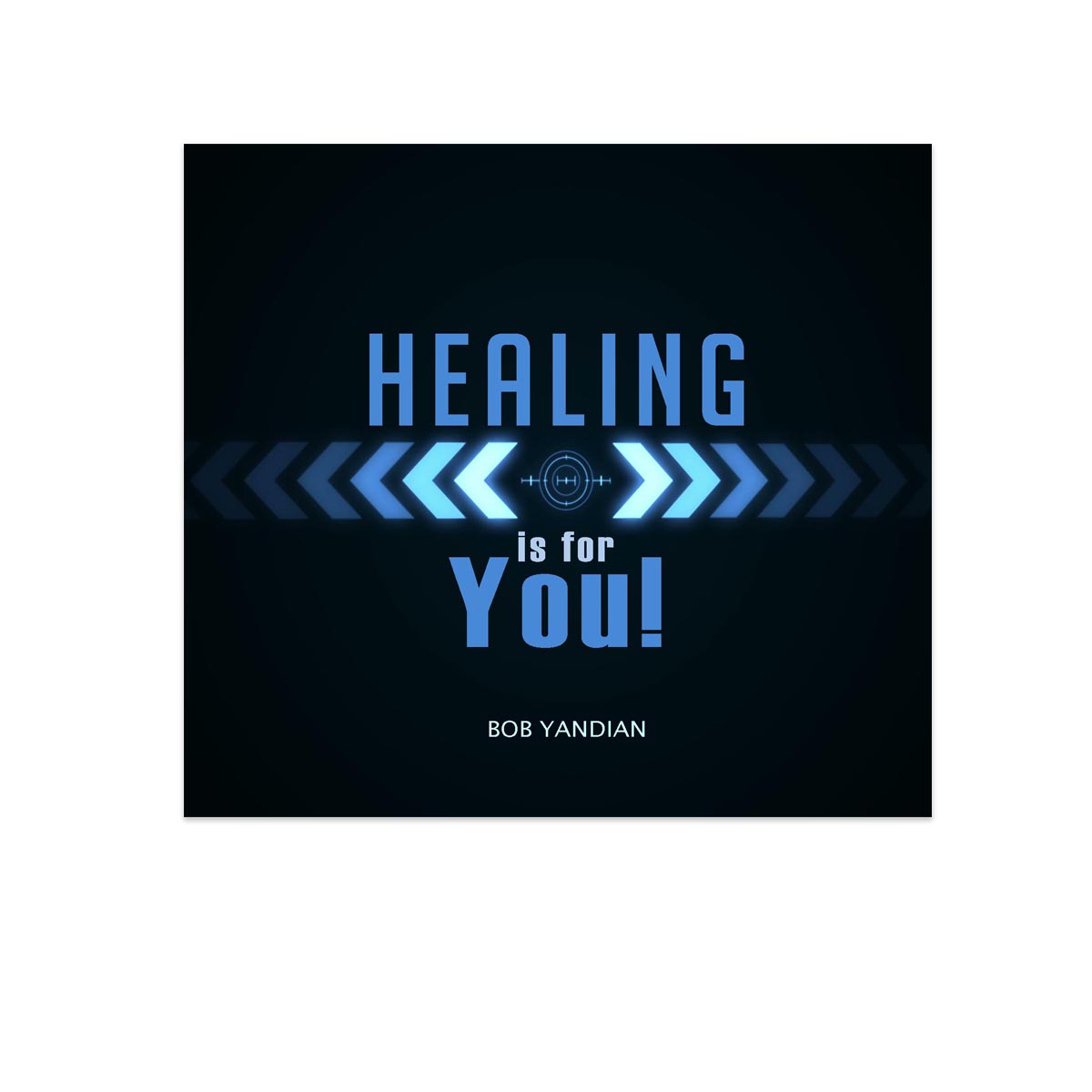
God wants you well! Not only does He have the ability, it is also His will to heal you. In this series Bob Yandian examines what God’s word has to say about healing and teaches you how to receive your healing. Topics include: God’s seven redemptive names, communion, confession, and where sickness comes from.
Message Titles:
Ability and Will
The Seven Redemptive Names
Origin of Sickness, Healing for All
The Communion Elements
Our Confession
6 MP3s / MHL16

Healing is one of the most controversial topics in Christendom, but the Bible is clear, God desires for us to be well. In this series Bob Yandian makes Divine Healing simple to understand and receive. Topics include stripes and strife, God's nature, forgiveness, Satan's devices, Paul's thorn, ways and methods of healing . This USB flash drive contains 27 MP3 audio lessons by Bob Yandian and 1 eBooks on the topic of Healing.
Series Titles: God's Nature is Healing, How Deep are the Stripes (eBook), Principles of Healing, Seven Levels of Healing, The Healing Lamb
27 MP3’s, 1 eBook
Series: God’s Methods of Healing, Healing Revisited, The Healing Lamb, The Other Side of the Cross, How Deep are the strips? (eBook)